
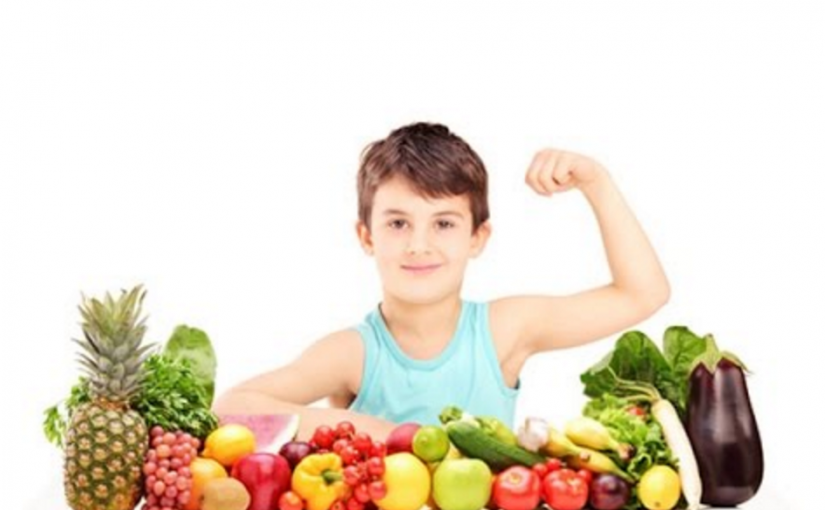
Trying to convince your children that fruits and vegetables are delicious and good for them has always been an uphill battle. However, it doesn’t have to be that way.
To increase consumption of fruits and vegetables, shop with your kids and let them prepare vegetable and fruit dishes. A child who makes the green beans himself may be more likely to eat them, If they can’t be bothered with cooking, sneak pureed vegetables into your children’s favorite foods and stock kid-level shelves in the fridge with baggies of cut-up veggies, fruits and fruit cups for easy access.
Also, shop organic if you can. If cost is a factor, however, be selective in buying organic, The most important thing is for kids to eat fruits and vegetables, organic or not.
Digestive Health: High-fiber foods, such as fruits and vegetables, help the digestive system function properly. Constipation in kids can often be eased by eating more high-fiber prunes, apricots, plums, peas, beans and broccoli. As fiber passes through the digestive system, it absorbs water and expands, which triggers regular bowel movements and relieves constipation.
Better School Performance: It’s widely known that children with healthy diets high in fruits and vegetables performed better on academic tests than children who consumed less of them, some studies saying up to 41% less likely.
Decreased Obesity: Fruits and vegetables are high in filling fiber, but low in fat and calories. Encouraging kids to eat fruits and vegetables instead of sugary snacks and fat-laden fast food can help children avoid obesity. According to the U.S. Department of Health and Human Services, 16 percent of kids ages 6 to 19 are overweight, increasing the risk of Type 2 diabetes, high cholesterol, hypertension, respiratory problems and depression.
Improved Nutrition: Children’s growing bodies require good nutrition, and fruits and vegetables contain a multitude of vitamins, minerals and other healthy compounds. Citrus fruits and strawberries are rich in immune system-boosting vitamin C, carrots are loaded with eye-healthy vitamin A and spinach is a good source of iron, a mineral that helps prevent anemia. Eating fruits and vegetables in a rainbow of colors will provide a wide range of nutrients that help keep kids healthy.
Do you have any special tips on how to get kids to eat more greens you’d like to share with our community? Leave your comment below.

The tangy, sweet taste of sweet bell peppers add a lovely light crunchiness to meals. Their bright colors of royal red, sunny...

Cucumber are an often overlooked vegetable in a child’s diet, primarily because they generally don’t like its otherworldly look. However, it’s possible...

Tomatoes are considered as one of the wonder foods as they are loaded with nutrients and antioxidants. Choosing to include tomatoes in...

A well-planned yoga class for kids will be able to teach them in an engaging way. A typical kids’ yoga class includes...
Trying to convince your children that fruits and vegetables are delicious and good for them has always been an uphill battle. However,...